Pesticide-contaminated soil
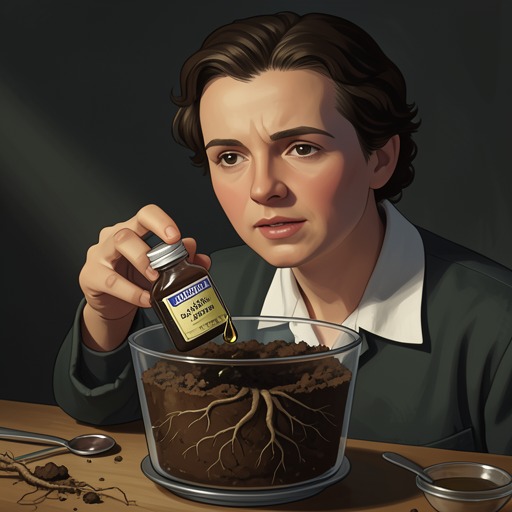
Silent SpringPesticide-contaminated soil is both a lasting store of agricultural chemicals and a route by which their effects travel onward into plants, wildlife, and the food supply. In the account developed in Silent Spring, poisons introduced for control do not simply vanish after application: they persist, accumulate through repeated treatment, interfere with living soil processes, and may be taken up by crops that received no direct spray. The result is a slow, often overlooked transformation of the ground beneath agriculture into a continuing source of exposure.
The soil as a living system
The book argues that the ecology of soil has been neglected by scientists and almost entirely ignored by those directing pest control. Chemical treatment, in practice, has proceeded as though soil could sustain any quantity of poison without responding. That assumption erases the soil’s active role: it is a living environment in which organisms and chemical transformations are interdependent, not an inert repository beneath the fields.
The consequences vary with local conditions. Light, sandy soils suffer more heavily than soils rich in humus, and combinations of chemicals appear more damaging than separate applications. These differences make a single generalization about soil contamination inadequate; the same treatment can produce different effects according to the ground receiving it and the mixture applied. Yet the accumulation of evidence has become sufficient to alarm scientists, particularly because some chemical transformations at the heart of the living world may be affected.
Soil contamination can also disturb ecological checks. Organisms that had previously been held in balance by natural controls may escape those restraints and rise to pest status. A poison intended to suppress one target can thus help create conditions for another problem, turning the soil’s disturbed relationships into part of the aftermath of chemical control.
Persistence and accumulation
The chemicals’ duration in soil is measured in years, not months. Aldrin has been recovered four years after application, both in traces of the original chemical and, more abundantly, after conversion into dieldrin. Toxaphene has been found twelve years after it was applied, with 15 percent of the original quantity still present. Such residues make the apparent end of a spraying program a poor guide to the end of its effects.
Repeated applications compound the problem. Persistent chlorinated hydrocarbons add to what remains from earlier treatments, so a dose that sounds modest when considered in isolation can contribute to a substantial long-term burden. The book challenges the claim that a pound of DDT per acre is harmless when spraying is repeated: potato soils have been found to contain as much as 15 pounds per acre, corn soils as much as 19, and one cranberry bog under study contained 34.5 pounds per acre. Those figures reveal a landscape where the relevant measure is not merely the latest application, but the accumulated history of treatment.
This persistence gives pesticide-contaminated soil a distinctive kind of reach. The chemical can remain after the immediate control effort has ended, and each later application may enlarge the legacy left by its predecessors. The ground records repeated decisions in quantities that are neither visible in the field nor captured by judging a single dose alone.
From contaminated ground to food
The movement of residues from soil into plants depends on the type of soil, the crop, and the kind and concentration of the insecticide. Soil high in organic matter releases smaller quantities of poison than other soils, but the book cautions against assuming that crops are protected simply because they were not sprayed directly. Their roots may draw chemicals from contaminated ground, making soil a route of exposure distinct from aerial or surface application.
Carrots absorbed more insecticide than any other crop studied. When the chemical was lindane, carrots accumulated concentrations higher than those present in the soil itself. The plant, in this example, does not merely reflect the contamination around it; it can concentrate the residue. The book therefore raises the prospect that soils may need to be analyzed before certain food crops are planted, lest an unsprayed crop take up enough poison from the ground to become unfit for market.
That prospect had already become a practical problem for at least one leading manufacturer of baby food. The concern is not confined to the fields directly targeted by a spraying operation: residue remaining in soil can reach crops through later planting, and the resulting contamination can complicate the use of produce in food. The distinction between sprayed and unsprayed crops consequently fails to guarantee that the food supply is free of pesticide residues.
Land use and ecological aftermath
The wider chapters set this soil problem within landscapes reshaped by management decisions. On the high western plains and lower mountain slopes, the sagebrush country developed through long natural processes, alongside animal life adapted to its conditions. The pronghorn and sage grouse belonged to this ecological setting; the land was not simply unused acreage awaiting conversion into grassland.
Land-management agencies, under pressure from cattlemen seeking more grazing land, pursued the removal of sagebrush in the name of progress. The immediate aim was to make room for grass, but the consequences extended beyond the intended plant target. In the Bridger National Forest, the United States Forest Service sprayed about 10,000 acres of sage country. The operation also killed willows, and with them the vegetation on which beavers depended. When William O. Douglas visited in 1959, the year of the spraying, he saw the willows shriveled and dying; the region’s former value for recreation, fishing, and hunting stood in contrast to the damage wrought by the supposedly improved landscape.
This account clarifies why soil contamination cannot be separated from the larger ecology of land treatment. Broad chemical interventions can alter plant communities, eliminate unintended vegetation, and unsettle the relationships that support wildlife. The ground is part of that network: its condition shapes what can grow, what animals can depend on, and what residues may enter crops. The book’s central warning is therefore not only that poisons persist, but that a policy treating land as a passive target can leave effects extending well beyond the intended pest and the moment of application.